Hi, I’m Lavsen.

I’m a PhD student in Electrical & Computer Engineering at Duke University, working with the Center for Virtual Imaging Trials. My research focuses on computational models of the human body—turning static medical scans into personalized digital twins and physiologically grounded 4D motion—alongside 3D medical vision and AI agents for imaging research.

Previously, I spent six months as a research intern with the cardiovascular imaging team at Siemens Healthineers. Before Duke, I earned my Erasmus Mundus Joint Master’s in Medical Imaging and Applications (MAIA) across France, Italy, and Spain, with prior research at BioMedIA (Imperial College London), VICOROB, and NAAMII in Nepal.

4D respiratory anatomy ·

Selected Work

Dynamic Anatomical Twins

Ongoing · 4D Physiological Simulation

Generating continuous, physiologically grounded 4D respiratory motion from a single static 3D segmentation—combining rigid ribcage kinematics, conforming costal cartilages, pulmonary vasculature, diaphragm-coupled abdominal wall mechanics, and deformed 4D attenuation volumes without image registration.
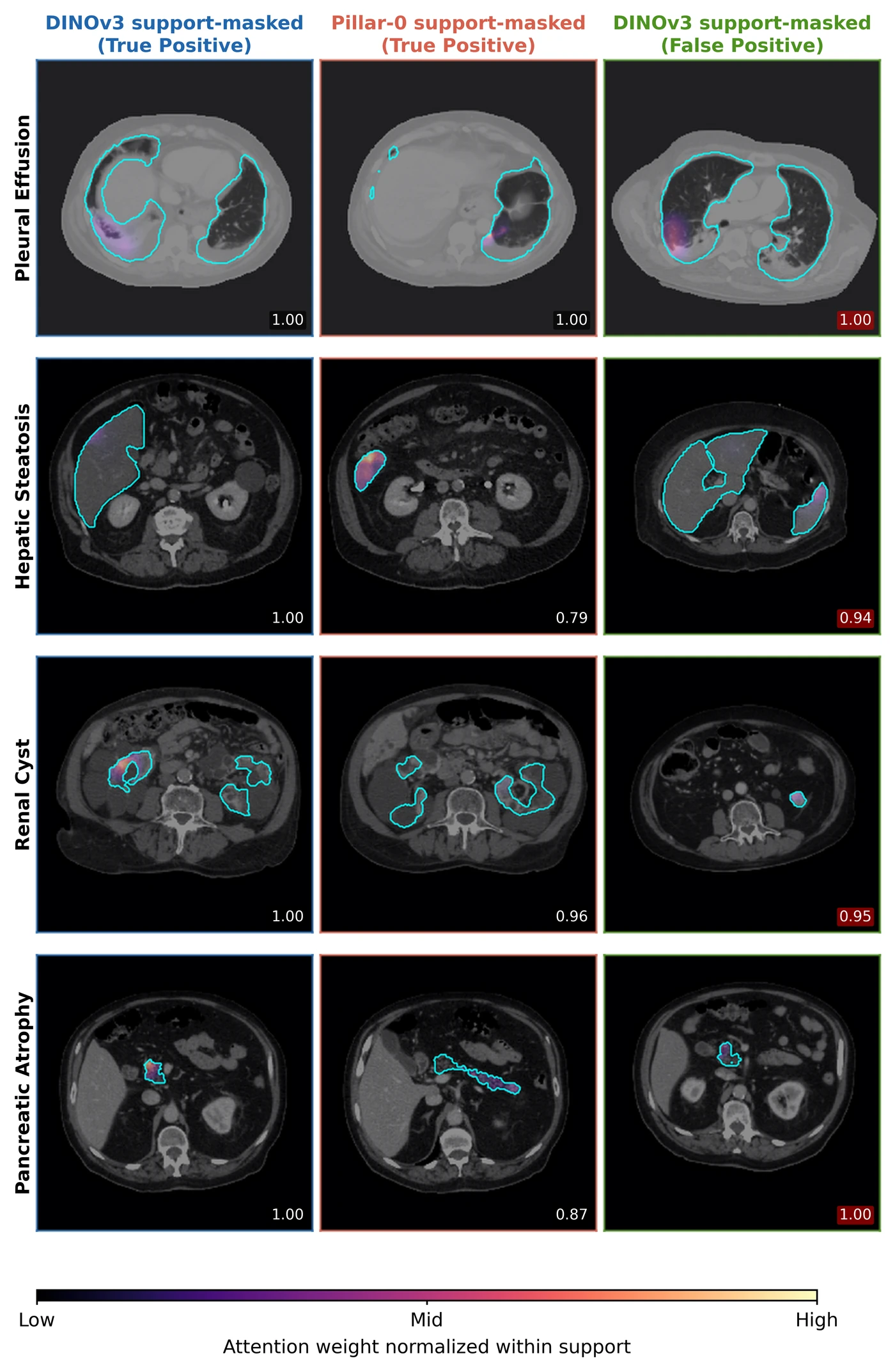
ORACLE-CT anatomy-aware support pooling attention comparisons

ORACLE-CT: Anatomy-Aware Support Pooling for CT Classification

arXiv:2606.05460 · 2026 · 3D Medical Vision

An encoder-agnostic framework (evaluated across DINOv3, I3D-ResNet, and Pillar-0) that uses multi-organ segmentation to define label-specific anatomical supports, improving disease discrimination, external transfer robustness, and auditable spatial evidence in 3D CT.

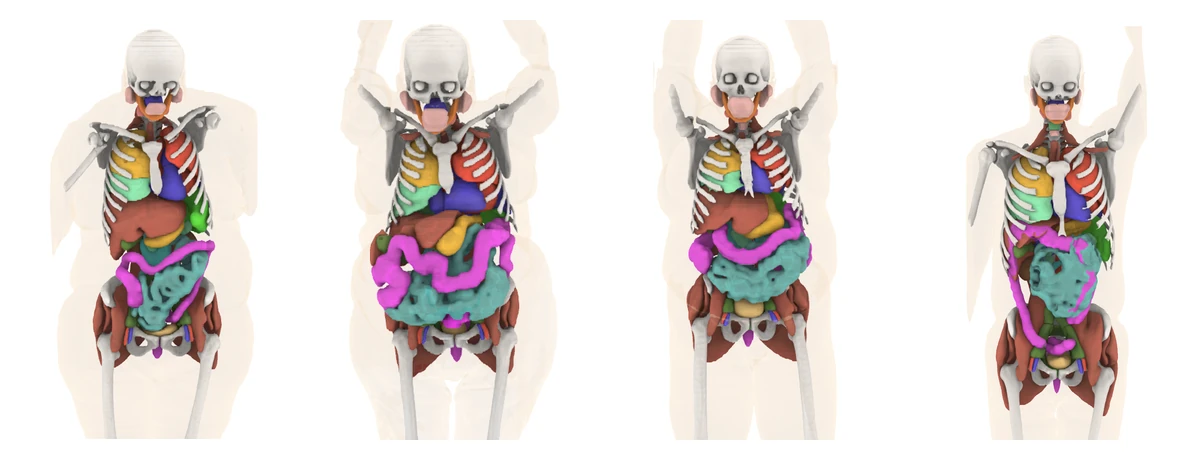
Personalized XCAT 3.0 computational phantoms showing anatomical diversity

XCAT 3.0: Personalized Digital Twins from CT

Medical Image Analysis · 2025 · Computational Phantoms

A framework for generating personalized anatomical digital twins directly from clinical CT scans, released with over 2,500 computational phantoms and up to 140 anatomical structures.

AI Agentic Workflow for Cardiovascular CT

Manuscript in preparation · Siemens Healthineers (Internship) · AI Agents

Developed an AI agentic workflow for cardiovascular CT covering 150+ findings during my six-month research internship with the cardiovascular imaging team at Siemens Healthineers, connecting imaging datasets, model evaluation, and structured clinical analysis.

Broader question: How can personalized digital humans, physiological simulation, and autonomous experimentation accelerate biomedical discovery and in-silico testing?